Description
Cylinder Testing Overhead Conveyor
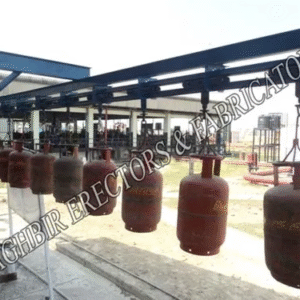
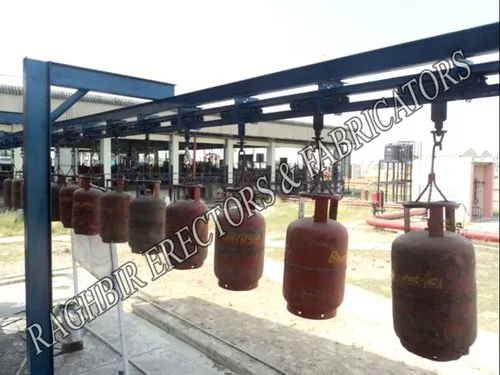
A Cylinder Testing Overhead Conveyor is a specialized material handling system designed to transport cylinders safely and efficiently through various testing, inspection, and quality control stages. Installed overhead, this conveyor system helps manufacturers optimize floor space while ensuring smooth, controlled, and continuous movement of cylinders during the testing process.
Cylinder testing overhead conveyors are commonly used in LPG cylinder plants, gas cylinder manufacturing units, industrial cylinder testing facilities, and pressure vessel inspection lines where safety, accuracy, and reliability are critical.
What Is a Cylinder Testing Overhead Conveyor?
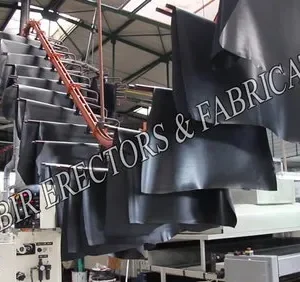
A Cylinder Testing Overhead Conveyor System carries cylinders along a ceiling-mounted track using specially designed trolleys, hooks, or fixtures. As cylinders move through the line, they can undergo hydrostatic testing, leakage testing, visual inspection, weighing, drying, and painting without manual handling.
Key Features of Cylinder Testing Overhead Conveyor
-
Space-saving ceiling-mounted design
-
Heavy-duty construction for safe cylinder handling
-
Smooth, stable, and controlled movement
-
Custom fixtures for different cylinder sizes and weights
-
Adjustable speed for accurate testing cycles
-
Low maintenance and long service life
Applications
-
LPG and CNG cylinder testing plants
-
Industrial gas cylinder inspection lines
-
Pressure vessel testing facilities
-
Cylinder requalification and refurbishment units
Advantages of Cylinder Testing Overhead Conveyor System
-
Enhances operator safety and reduces manual handling
-
Ensures consistent and accurate testing conditions
-
Improves productivity and workflow efficiency
-
Optimizes floor space utilization
-
Easy integration with testing and safety equipment
Why Choose a Cylinder Testing Overhead Conveyor?
A cylinder testing overhead conveyor system ensures a controlled, safe, and efficient testing process for high-risk pressure vessels. Its customizable design allows it to meet industry safety standards while supporting high-volume testing operations.